






Introduction
Pungudutivu is a historic island village located in the Jaffna District of Sri Lanka’s Northern Province. Known for its deep-rooted Saiva traditions, commitment to education, and strong diaspora, the island has played a unique role in shaping the cultural and intellectual life of the Jaffna peninsula. Geographically modest in size but culturally immense, Pungudutivu stands as a living archive of Tamil heritage, resilience, and community-driven development.
For centuries, the people of Pungudutivu have preserved their traditions, maintained their temples, built schools with their own resources, and carried their identity across continents. Today, the village remains both a sacred homeland and a global network of families connected by history, faith, and memory.

1. Geography and Administration
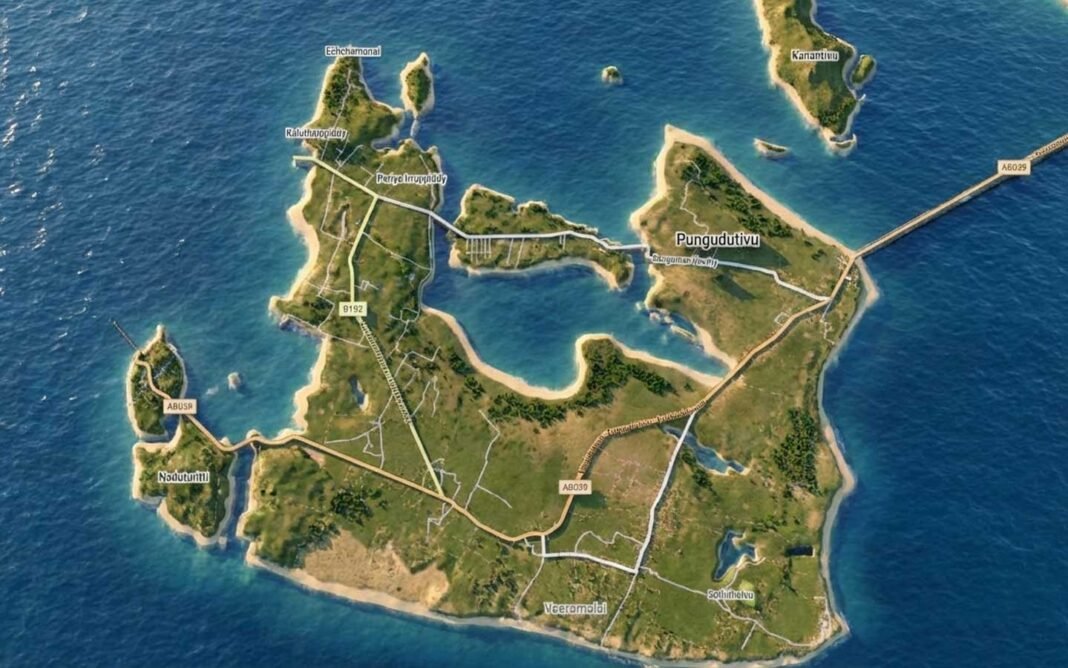
Pungudutivu is situated approximately 24 kilometers southwest of Jaffna town. It is geographically linked to the island of Velanai (Kayts) by a causeway, making it accessible by road while still preserving its distinct island identity. The village also serves as the gateway to Nainativu (Nagadeepa), one of the most sacred islands in Sri Lanka for both Hindu and Buddhist devotees.
Administratively, the island is traditionally divided into 12 wards (Vattaram), each representing long-established residential clusters with their own temples, schools, and community networks. This ward-based organization has played a vital role in managing social life, religious festivals, and educational institutions over generations.
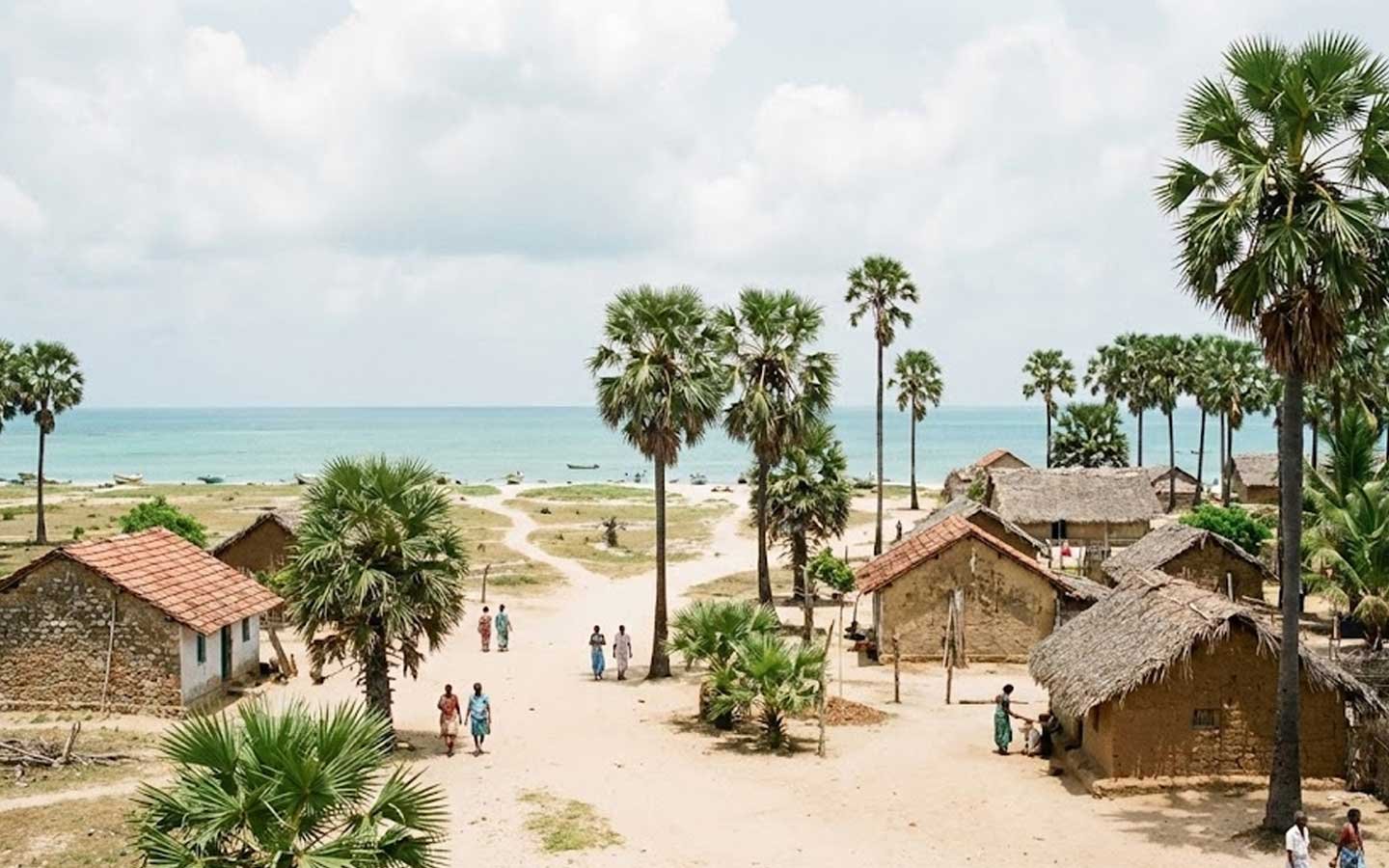
The landscape of Pungudutivu is characteristically flat and arid, dominated by Palmyra palms and limestone bedrock. Freshwater sources were historically scarce, forcing residents to rely on rainwater harvesting and carefully maintained wells. These environmental limitations shaped a culture of conservation, cooperation, and ingenuity that continues to define the community.
Key locations include Iruppitti and Ariyanayakampulam in the west, which developed into major settlements; Kalliaru, a historic port area referenced in early 20th-century records as a vital trade link; and Kerative, which housed the hospital and traditional cremation grounds.
2. History and Legends
Ancient Origins & The Ramayana Connection
Local tradition, preserved in temple histories and oral narratives, connects Pungudutivu to the epic Ramayana. According to legend, Lord Rama, after his great battle, sought absolution from the Veerakathi Dosha (the sin of killing a warrior) by worshipping Lord Ganesha on this island. This sacred act is believed to have taken place at what is now the Sri Veerakathi Vinayakar Temple in Ariyanayakampulam.
The temple, with a recorded history of over 300 years, stands as a symbol of the island’s ancient spiritual significance. While legendary in nature, these traditions continue to shape the religious identity and pilgrimage culture of Pungudutivu.
Colonial Era: “Middleburg”
During Dutch colonial rule, the island was renamed Middleburg. Despite this official designation, the Tamil name “Pungudutivu” endured in local usage, believed to derive from the abundance of Pungai trees that once flourished across the island. The retention of the native name reflected the community’s resistance to cultural erasure during colonial governance.
The 20th Century: Struggle for Infrastructure
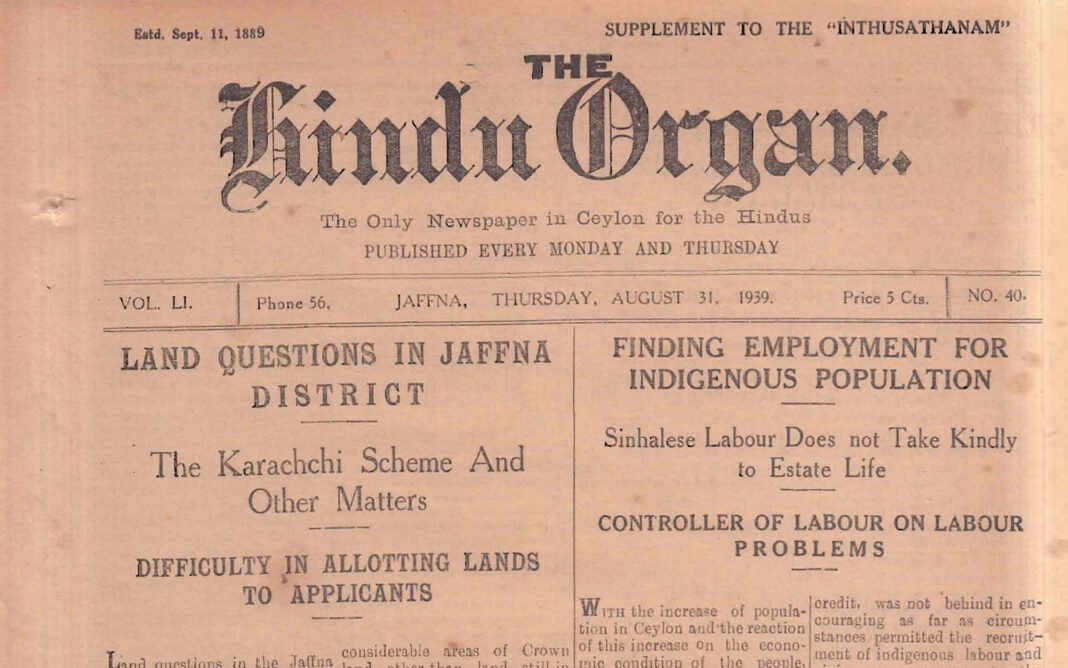
By the early 1900s, Pungudutivu faced severe neglect in infrastructure development. A historically significant letter from 1939 describes how the main D.R.C. Road connecting the Kandasamy Temple to the Kalliaru port was nothing more than a mud track. During monsoon seasons, it turned into a swamp of disease-breeding water, effectively isolating residents from essential services.
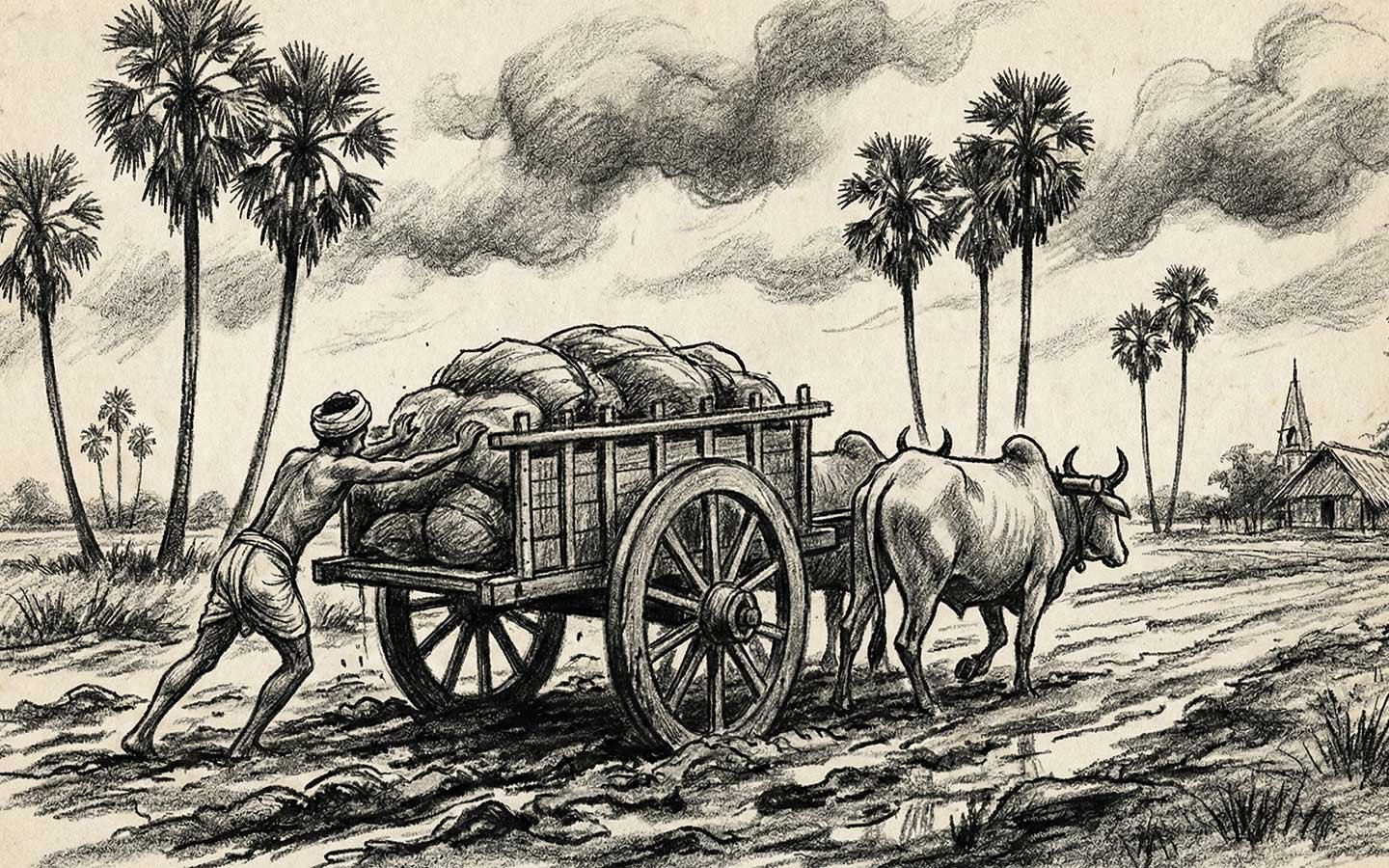
Farmers struggled to transport paddy and straw, and the sick found it nearly impossible to reach the hospital at Kerative. This period forged a culture of resilience and self-reliance, compelling villagers to depend on community philanthropy rather than state assistance. These hardships shaped the collective identity of Pungudutivu as a village that survives through unity and determination.
3. Educational Heritage
Education has long been the cornerstone of Pungudutivu’s social philosophy. Unlike many rural communities, the island’s schools were largely established through private philanthropy rather than government initiative. Wealthy merchants, scholars, and religious leaders invested in education as a means of cultural preservation and social advancement.
Sri Ganesha Maha Vidyalayam – The First Saiva School
Founded on March 3, 1910 by the visionary philanthropist Amarar V. Pasupathipillai, Sri Ganesha Maha Vidyalayam was established to provide Saiva-centric education at a time when missionary schools dominated the region. It began humbly as a Thinnai Pallikoodam (veranda school) under banyan and bo trees on land belonging to Mr. Ni. Ambalavanar.
By 1914, the school received government assistance, and in 1923 it was upgraded to a Central School with a permanent building. In 1980, it achieved the status of a Maha Vidyalayam. Over the decades, the school produced scholars, doctors, writers, and administrators, becoming a powerful symbol of intellectual resistance against colonial cultural dominance.
Pungudutivu Central College (formerly Pungudutivu Maha Vidyalayam)
Established on January 17, 1946, Pungudutivu Central College was founded to meet the growing demand for English-medium education. The initiative followed a request made to the Director of Education, L.M.D. Robison, during a 1940 function at Sri Ganesha Vidyalayam. Today, the school stands as one of the most respected institutions in the island, offering science and arts streams and continuing the legacy of academic excellence.

Major Schools on the Island
- Pungudutivu Central College (Ward 5) – 1AB Grade (Science & Arts)
- Pungudutivu Sri Ganesha Maha Vidyalayam (Ward 12) – 1C Grade
- Pungudutivu Siddhivinayakar Maha Vidyalayam (Ward 5)
- Pungudutivu Sri Subramaniya Makalir Maha Vidyalayam – Girls’ School (Ward 1)
- Pungudutivu Roman Catholic Tamil Mixed School (Ward 12)
4. Spiritual Life and Temples
Pungudutivu is widely regarded as the “Island of Temples”. Historical accounts record over 15 major temples where daily Nithya Pooja is performed, alongside numerous smaller shrines. Religious observance is not merely ceremonial; it forms the foundation of community life, moral education, and social organization.

Sri Veerakathi Vinayakar Temple (Ariyanayakampulam)
One of the eight major Ganesha temples on the island, this temple traces its origins back more than three centuries. The temple underwent major consecrations in 1973 and again on February 10, 1989. Featuring a sacred tank (Theertha Kulam) and a decorated chariot (Chitra Ther), it stands as a testament to community-driven religious patronage.
Other Major Temples
- Pungudutivu Kannakai Amman Temple
- Pungudutivu Thallaiyapattu Murugan Temple
- Pungudutivu Panavadai Sivan Temple
- Pungudutivu Peunkadu Sivan Kovil
- Pungudutivu Muthumari Amman Temple
Each of these temples serves not only as a place of worship but also as a cultural nucleus, hosting annual festivals, classical music recitals, and community gatherings that reinforce collective identity.
5. Economy and Diaspora
Historically, Pungudutivu’s economy was agrarian. Families relied on paddy cultivation, cattle rearing, and subsistence farming. The port at Kalliaru functioned as the island’s commercial lifeline, enabling the export of produce to mainland markets.
By the late 20th century, economic patterns shifted dramatically. Pungudutivu natives emerged as successful entrepreneurs, establishing jewelry shops, textile businesses, and travel agencies in Colombo and Jaffna. Advertisements from the 1980s document enterprises such as New Lalitha Jewellers, Nadiya Jewellery, and Asian Travel Services.
The civil conflict accelerated migration, giving rise to a vast diaspora in Canada, the United Kingdom, and Europe. Today, remittances and philanthropic contributions from abroad continue to fund schools, temples, and community projects, ensuring that the village remains economically and culturally sustainable.
6. Notable Personalities
Pungudutivu has produced numerous scholars, administrators, and philanthropists whose contributions shaped the island’s educational and social landscape.
- Amarar V. Pasupathipillai – Founder of Sri Ganesha Maha Vidyalayam (1910), revered as the “Father of Education” in Pungudutivu.
- K.M. Chinnathurai – Respected Maniyakaran (Village Headman), known for his leadership and stewardship of educational institutions.
- Prof. S.E. Sadasivampillai – Scholar and former principal who introduced the Old Students Association concept, strengthening alumni engagement.
- Ka. Namasivayampillai – First headmaster of Ganesha Vidyalayam, instrumental in integrating Thevaram hymns into school culture.
Conclusion
Pungudutivu is more than a geographic location—it is a living heritage of faith, education, resilience, and community spirit. From its ancient legends and sacred temples to its pioneering schools and global diaspora, the village embodies a unique blend of tradition and progress.
As generations continue to migrate, build, and return, Pungudutivu remains a cultural anchor for its people worldwide. Preserving its history is not merely an act of remembrance but a commitment to sustaining a legacy that has endured for centuries.
© 2026 pungudutivu.today – Preserving the Heritage of Pungudutivu.