


Echoes from 1939: A Historical Plea for Pungudutivu’s Infrastructure
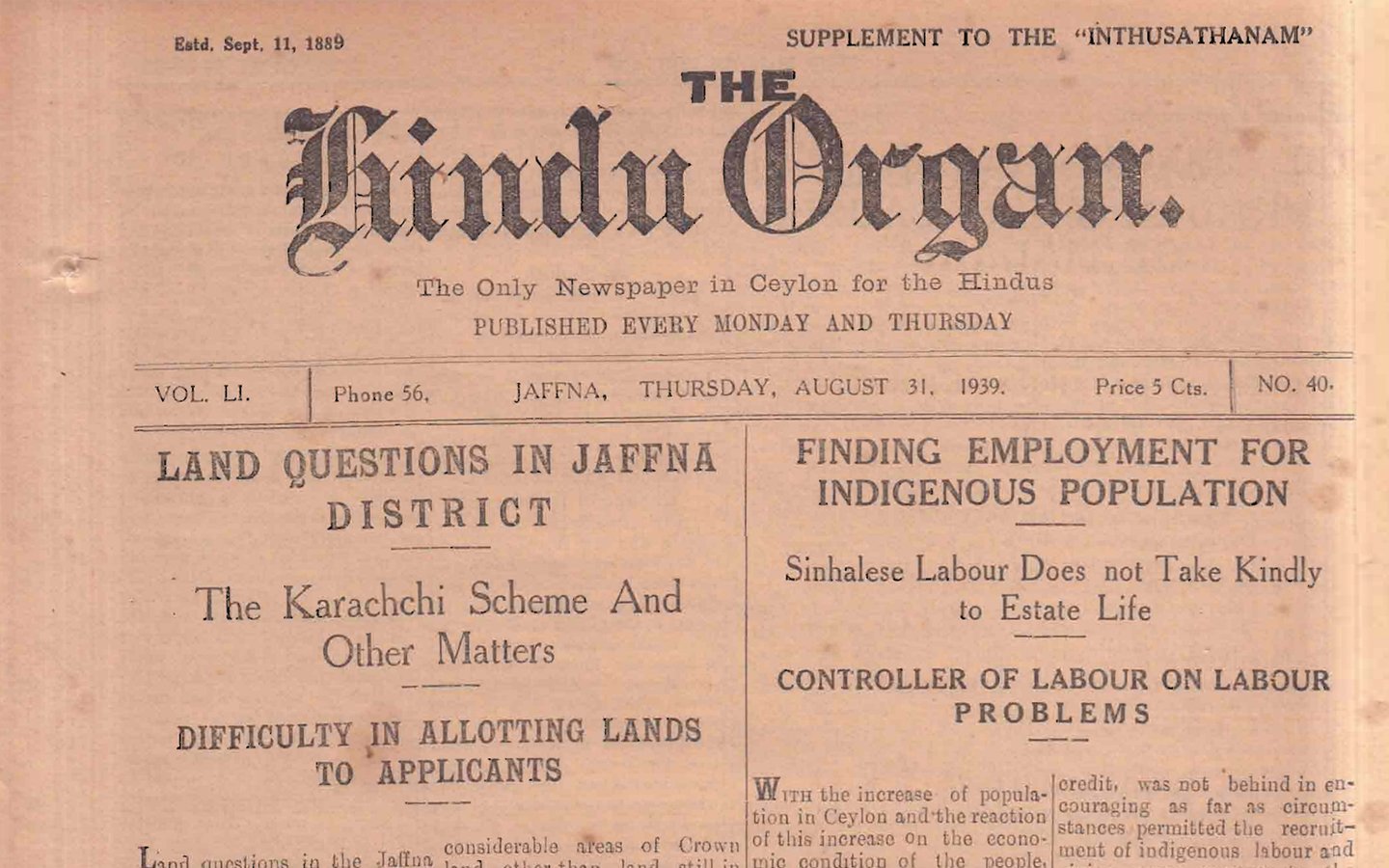
History is often recorded in the grand events of nations, but the true pulse of a community is found in the everyday struggles of its people. A recently unearthed letter, published in “The Hindu Organ” on August 31, 1939, offers a rare window into life in Pungudutivu over 80 years ago. Written by Mr. V. Canagasabai, the letter titled “Wanted a D. R. C. Road at Pungudutivu” is a passionate appeal to the authorities of the time to address the dire state of transport on the island.
A Forgotten Constituency?
In his letter, Mr. Canagasabai begins with a sentiment that many islanders might still recognize today. He notes that the islands comprising the Kayts constituency were often “disregarded, perhaps unconsciously,” by authorities in charge of local communications. He argues that this neglect left the islanders isolated, unable to adapt to “modern environments both cultural and administrative” due to an “antiquated and inhumanly slow system of communication.”
The Lifeline: Kandasamy Temple to Kalliaru
The core of the grievance focused on a specific “D.R.C. Road” (District Road Committee road) that ran from the historic Kandasamy Temple to Kallaikadu and Kalliaru. While officially designated a road, the letter describes it as merely a pathway made of “loose earth.”
For the farmers of 1939, this path was critical. It was the only route to transport manure, paddy, and straw to their fields. It was also the sole track for driving cattle to the pastures at Kerative and Kalliaru. However, the writer vividly describes the nightmare of the rainy season: the road would become a bog, stagnant with “unhealthy and disease-breeding water,” rendering it unfit for pedestrians, carts, or cattle.
The Cost of Neglect: Ports and Hospitals
The letter highlights how poor infrastructure had a domino effect on the island’s economy and health. This specific road was the main artery connecting the village to a “port of prime importance.” Because the road was impassable, the port fell into disuse. Passengers and cargo were forced to take a “roundabout and extremely rocky course” to land elsewhere, causing immense inconvenience.
Perhaps most critically, this track was the only pathway to the hospital and cremation grounds at Kerative. The image of a community struggling to transport the sick or the deceased along a muddy, waterlogged path is a stark reminder of the hardships faced by previous generations.
A Lesson from the Archives
Mr. Canagasabai’s letter concludes with a firm demand for the authorities to “take adequate steps to redress a long-standing grievance.”
Today, as we look at the developed roads and connectivity of modern Pungudutivu, documents like this serve as essential milestones. They remind us of the resilience of our ancestors who fought for the basic amenities we often take for granted. Preserving these voices from 1939 ensures that the history of Pungudutivu’s development is never forgotten.



Wanted a D. R. C. Road at Pungudutivu
Sir,
The islands comprising part of the Kayts constituency have often been disregarded, perhaps unconsciously, by the authorities in charge of local communications and transport. As a result the inhabitants of these lands find it very difficult to adopt themselves to modern environments both cultural and administrative. The inhabitants of these lands shut out from the peninsula by the antiquated and inhumanly slow system of communication that is at present functioning in these areas.
The most record-breaking of all the impediments that hinder and almost mar the progress of the inhabitants of these islands is the system of communication that exists in the island of Pungudutivu. In the island of Pungudutivu there exists a D R C road that runs from the pilgrim haunted Kandasamy Temple to Kallaikadu and Kalliaru. This path way is entirely made up of loose earth and the farmers have to convey the manure, paddy and straw by this very pathway to the adjoining fields.
Moreover this is the only pathway by which cattle can be taken down to the pastures at Kerative and Kalliaru. During the rainy season its use by pedestrians, carts and cattle is rendered unfit for the purpose owing to the boginess of the pathway caused by the stagnation of unhealthy and disease-breeding water. This is a source of great inconvenience to the farmers as well as the inhabitants of the place.
The pathway is more than a century old and is the main line of communication from a port of prime importance to Pungudutivu. The neglected condition of this pathway does not permit the use of this port. As a consequence passengers have to take a roundabout and extremely rocky course to reach another spot where they can land their cargo and passengers. Apart from this is the only pathway to the hospital and cremation grounds at Kerative. So it is extremely incumbent on the part of the authorities who are in charge of the roads to take adequate steps to redress a long-standing grievance.
Irupiddy, Pungudutivu, 30-8-39
Yours etc. V. Canagasabai